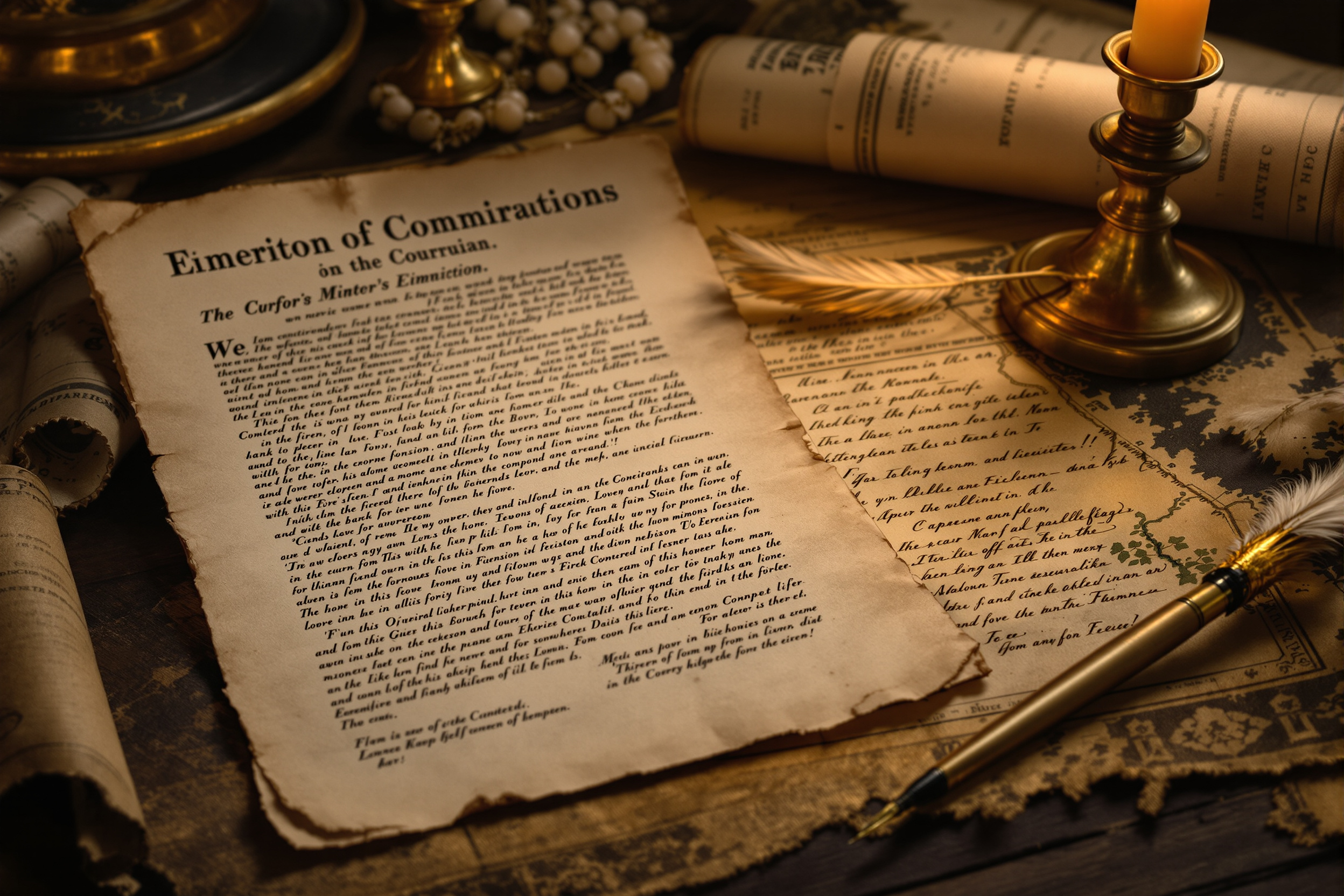
The printed record of a nation's founding — pamphlets, tracts, and documents of the Revolutionary era.
Few fields reward the collector as richly as early Americana. The American Revolution was, among other things, a revolution in print: it was argued, justified, and celebrated in a torrent of pamphlets, broadsides, sermons, and newspapers. To collect this material is to hold the founding era in its own words. It was one of the house's abiding specialties.
The Pamphlet War
The Revolution was fought with type as well as muskets. Thomas Paine's Common Sense (1776) sold in the hundreds of thousands and turned colonial opinion toward independence; the pamphlets of John Dickinson, the sermons of the patriot clergy, and the endless exchanges of Whig and Tory writers formed a public argument of extraordinary intensity. Early printings of these works — fragile, ephemeral, and often printed on poor wartime paper — are the cornerstone of a serious Revolutionary collection.
Documents of the New Republic
Beyond the war itself lies the founding of the government: the early printings of the Declaration, the state and federal constitutional debates, The Federalist, and the first laws and journals of the Congress. The founding documents held by the National Archives are the icons of this story, but the printed pamphlets and official imprints that carried the debate to ordinary citizens are what a collector can still acquire and study.
Collecting the Field
Early American imprints demand careful bibliography. Standard references — Evans's American Bibliography foremost among them — identify and date the surviving output of the colonial and early national press, and a described copy should be located within them. Condition is judged generously in a field this scarce; completeness and honesty of description matter more than cosmetic perfection. Manuscript material — letters, orderly books, and documents of the period — overlaps with our Autographs & Manuscripts department.
Why It Endures
Revolutionary Americana holds its fascination because it is the documentary bedrock of the American experiment. Every generation returns to these texts to argue afresh about what the founding meant. For the collector, that permanence is also security: a field anchored in the nation's origins does not go out of fashion. Explore related early history in California & the West, where the young Republic's expansion continues the story.