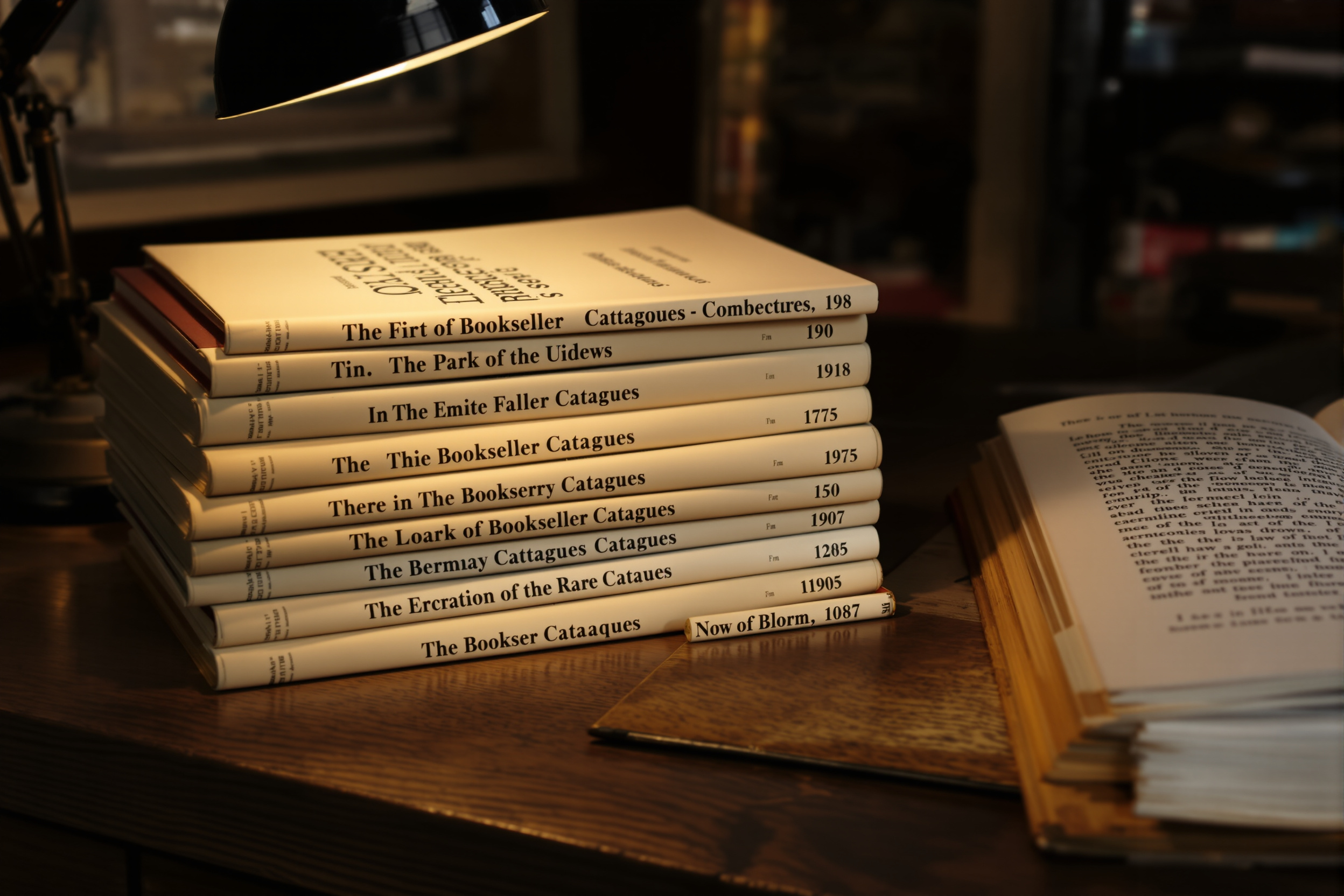
The printed catalogue — the enduring instrument of the antiquarian trade.
Long before the internet, the printed catalogue was how a rare-book house met its customers. A good catalogue is more than a price list: it is a work of scholarship, a small anthology of bibliographical detective work, and — at its best — a pleasure to read for its own sake. Randall House issued catalogues for decades, and they remain the clearest record of how the house thought about books.
The Art of the Catalogue Description
Each entry in a serious catalogue follows a discipline. It gives the author and exact title, the place and printer and date, and the format — folio, quarto, octavo. It identifies the edition, issue, and state, citing the standard bibliographies where they exist. It describes the binding and reports condition honestly, noting foxing, wear, or restoration. And, where the book deserves it, the entry adds a note of context: why this copy, this issue, or this association matters. To decode that vocabulary, see our Glossary of Book-Collecting Terms.
Subject and Author Catalogues
Some catalogues ranged across the whole stock; others concentrated on a single field or author. Among the most notable was a catalogue devoted to Robert Louis Stevenson — “a teller of tales” — gathering books and ephemera by and about the author. Author catalogues of this kind are prized by collectors and institutions alike, because they assemble in one place the scholarship needed to understand a writer's bibliography.
Why Catalogues Endure
Even as the trade moved online, the catalogue kept its value. A well-made catalogue is cited by later booksellers and by scholars; copies are collected in their own right; and the descriptions become part of the permanent record of a book's history — its census, its provenance, its passage from hand to hand. The Bibliographical Society of America and its counterparts exist precisely to sustain this kind of careful, cumulative knowledge.
Exploring the Fields
The subjects covered by the catalogues are reflected in these guides. Begin with Modern First Editions, the American Revolution, California & the West, or Natural History — each a field in which the house catalogued fine copies for the collectors who cared about them.