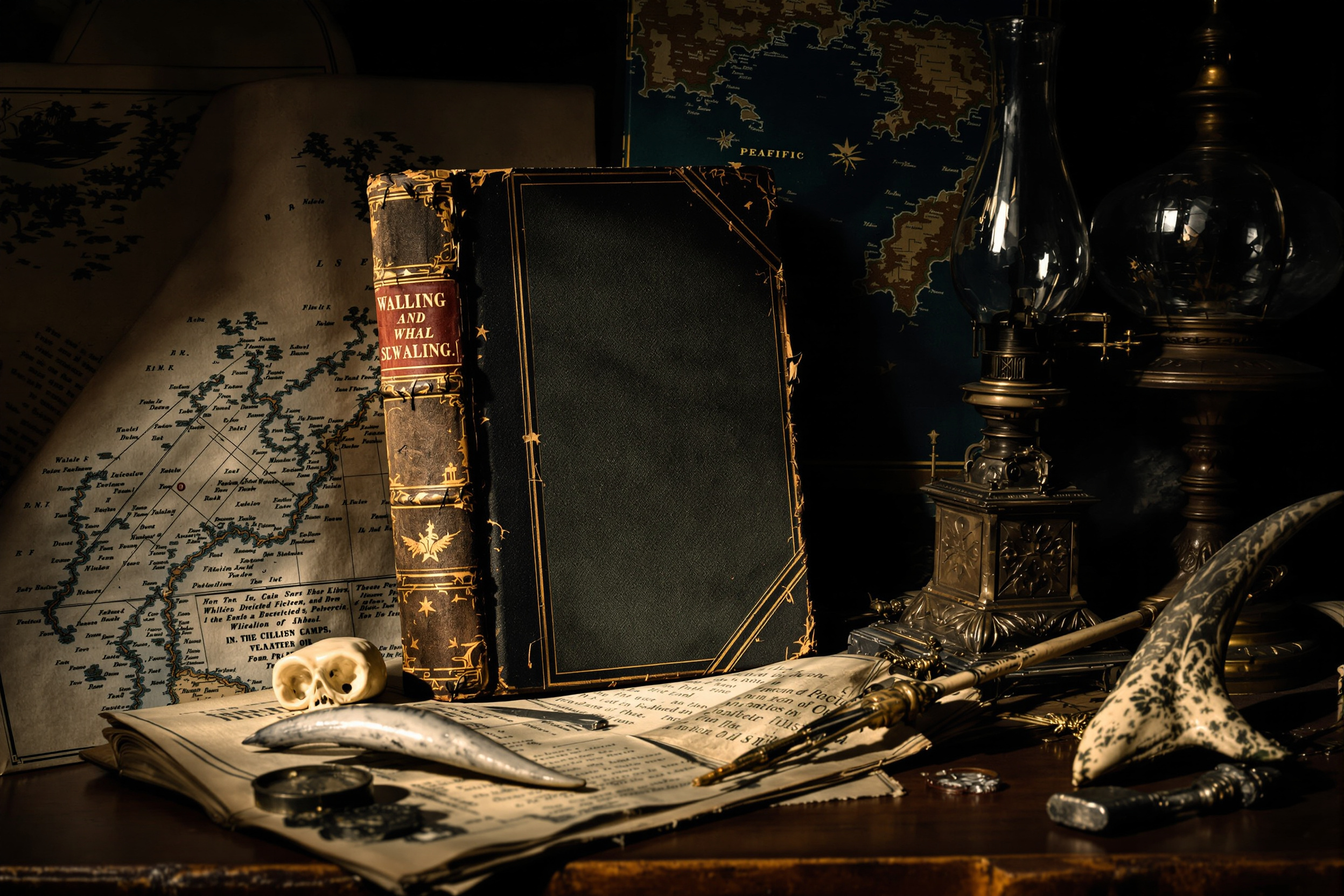
The great chronicler of the sea — a collecting field of romance and difficulty.
Herman Melville (1819–1891) is now securely among the giants of American literature, but his first editions carry the marks of a career that rose fast, fell hard, and was rediscovered only long after his death. That history makes collecting him a peculiar pleasure: his early sea narratives were popular and are attainable, while his masterpiece went neglected and is now among the rarest of American literary trophies. The following notes draw on the authentic bibliographic descriptions the house recorded.
Typee and the Early Success
Narrative of a Four Months' Residence Among the Natives of a Valley of the Marquesas Islands — better known by its later American title, Typee — was Melville's first book, published in London by John Murray in 1846. As the house's own catalogue once described a superb copy: an octavo in original blind-stamped scarlet cloth, first edition, first issue, first cloth binding, with the earliest state of the publisher's catalogue. It was followed in 1847 by Omoo: A Narrative of Adventures in the South Seas (New York: Harper & Brothers) — the first American edition of which is rare in its original printed wrappers. These South Seas books made Melville's early name.
Moby-Dick and the Great Rarity
In 1851 came Moby-Dick; or, The Whale — published first in London (as The Whale) and then in New York. Commercially it failed, and Melville's reputation declined with it; yet it is now recognized as one of the supreme achievements of American literature. First editions, especially the American issue in fine original cloth, are among the most coveted and valuable of all American first editions — the kind of book a specialist house handles only rarely, and always with care.
Points, States, and the Bibliography
Melville collecting is exacting. The transatlantic publication of many titles creates questions of priority between the English and American editions; bindings and issues must be distinguished; and the standard reference, the Bibliography of American Literature (BAL), should be consulted for every title. A described copy should cite its BAL number and specify issue and state, exactly as our catalogue descriptions did.
Why Melville Endures
Few authors reward the collector as Melville does. His books span popular success and sublime failure; they touch the great themes of the sea, of America, and of the human confrontation with the unknowable; and their bibliography is deep enough to occupy a lifetime. The field connects naturally to the literature of voyages and the sea and to first-edition collecting at large.